
To resolve a property boundary line dispute legally, hire a licensed land surveyor to map the exact physical borders, review your original title deed, and negotiate a written boundary agreement before escalating to an expensive civil lawsuit.
The Sudden Threat to Your Sanctuary
You wake up on a peaceful Saturday morning, grab your coffee, and look out the kitchen window. Your stomach instantly drops. Your neighbour
hired a landscaping crew, and they are digging post holes for a brand-new privacy fence.
The problem is immediately obvious. Those wooden posts are sitting a full two feet inside your meticulously maintained garden.
A rush of territorial anger hits you. You pay property taxes on that dirt. You mow that grass every single week. Suddenly, someone else is physically claiming a piece of the biggest financial investment you own. You walk outside to confront them, emotions running high, and the conversation quickly deteriorates into a shouting match.
This scenario destroys the peace of your home. You start losing sleep, wondering if the police will get involved or if you will have to drain your savings account to hire a real estate attorney. Living directly next to someone who is actively trying to steal your property creates a suffocating, hostile living environment.
Do not grab a sledgehammer, and do not start screaming over the property line. Boundary conflicts are highly technical legal issues, and the loudest person never wins. The person with the best physical documentation wins. I am going to show you exactly how to pause the construction, gather your hard evidence, and protect your land legally without bankrupting your family.
Establishing the Undeniable Facts
When neighbours argue over land, they usually rely on terrible evidence. They point to an old rusty chain-link fence, an overgrown oak tree, or a conversation they had with the previous owner a decade ago.
None of those things hold any actual weight in a courtroom. Legal boundaries are invisible, mathematical lines recorded in a government building. You have to pull the emotions out of the conflict and focus entirely on the math.
Retrieving Your Title and Plat Map
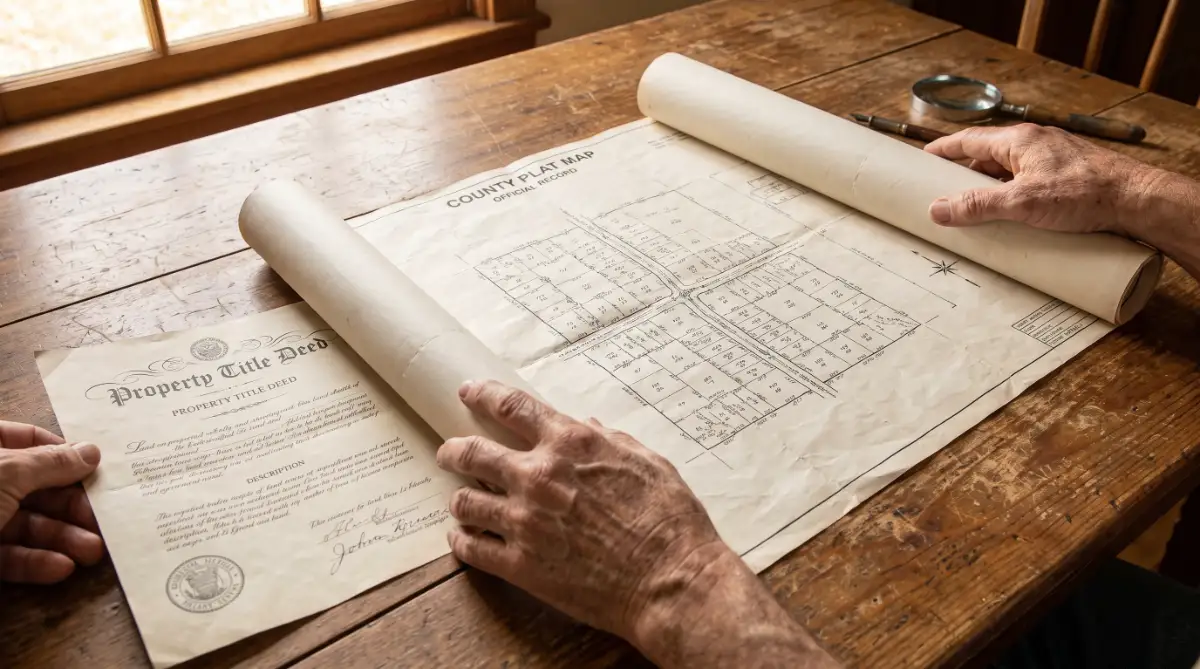
Your first defensive move happens at your desk, not in the yard. Dig out the closing documents from when you originally purchased the house. You are looking for your property deed and your plat map.
A plat map is a highly detailed drawing of your neighbourhood grid. It shows the exact dimensions of your lot. If your deed says your western boundary is exactly one hundred feet long, that is your legal reality.
If you lost these documents, do not panic. You can request a fresh copy from your local county recorder or assessor's office for a very small fee.
Hiring the Ultimate Authority
Reading a map is helpful, but you likely lack the laser-guided tools to measure a hundred feet perfectly across uneven dirt. You must hire a licensed professional land surveyor.
A surveyor acts as an objective, unbiased judge. They pull the historical records, come to your house with GPS-guided equipment, and drive heavy metal pins directly into the corners of your property.
They will draw a stark, undeniable physical line between your house and your neighbour's house. Hiring a surveyor immediately stops all the guessing and yelling. For an official directory of licensed professionals, you can consult the National Society of Professional Surveyors (NSPS), which maintains strict ethical and technical standards for mapping land.

Initiating Formal Written Communication
Once the surveyor marks the grass, the truth is exposed. If the neighbour is actively building on your land, you must tell them to stop immediately.
Do not do this by yelling over the bushes. You must send a formal, polite letter via certified mail.
A certified letter requires a signature upon delivery. It proves to a judge that you officially notified the neighbour of the exact boundary line and requested they halt construction. Maintaining a highly professional, documented tone is just as important as mastering your brand voice for consistent communication in the business world. Emotional outbursts ruin your credibility, but a certified letter establishes a solid paper trail.
Pro-Level Legal Maneuvers for Homeowners
Sometimes, a surveyor marks the dirt, and the neighbour simply refuses to care. They ignore your certified letter and keep building the fence. When diplomacy fails, you must escalate to advanced legal protections.
Before you write a massive retainer check to a local attorney, you need to check your own safety nets. You might have an entire legal team waiting on standby that you completely forgot about.
Activating Your Title Insurance
When you bought your home, you likely paid for a one-time policy called 'title insurance'. This policy protects you if someone else claims ownership of your land.
Pull your policy documents immediately and call the provider. If your neighbour is actively encroaching on your deeded land, many title insurance policies will step in to defend you. They will often pay for the land surveyor and provide their own corporate lawyers to fight the neighbour on your behalf.
Failing to use the insurance you already paid for is a massive financial waste. This is identical to the silent tax traps destroying life insurance payouts. If you ignore the tools buried in your financial paperwork, you end up paying heavily out of your own pocket.
Negotiating a Lot Line Agreement
If the neighbour accidentally built a retaining wall six inches onto your property, forcing them to tear it down might cost thousands of dollars and trigger a decade of neighbourhood hostility.
You can offer a strategic compromise called a 'lot line agreement'.
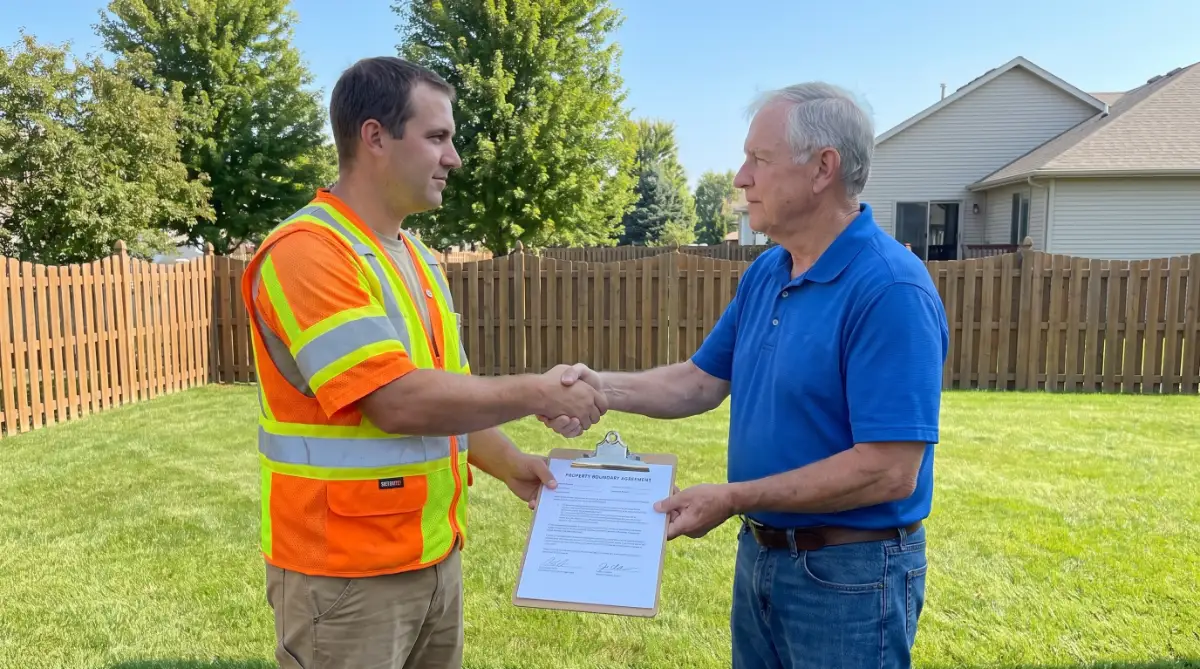
You and the neighbour agree to legally redraw the boundary line to accommodate the wall. In exchange for those six inches of dirt, the neighbour pays you a negotiated cash settlement. You then take this written agreement to the county clerk and officially record it. This permanently solves the dispute without a single day in court.
This table clearly illustrates why a civil lawsuit should be your absolute last resort. You want to solve the problem quickly and quietly.
The Destructive Mistakes That Cost You Your Land
Real estate law is incredibly rigid. If you let your emotions dictate your actions, you can accidentally forfeit your legal rights.
The biggest, most destructive mistake a homeowner can make is physically tearing down the neighbour's encroaching fence.
You might think you have the absolute right to destroy anything sitting on your grass. You do not. If you take a sledgehammer to their wooden posts, law enforcement will arrest you for criminal vandalism and destruction of private property. You turn a civil real estate dispute into a criminal record instantly.
The Silent Threat of Adverse Possession
Another massive mistake is ignoring the encroachment to keep the peace. You notice the neighbour built a shed a foot over the line, but you decide not to say anything because you hate confrontation.
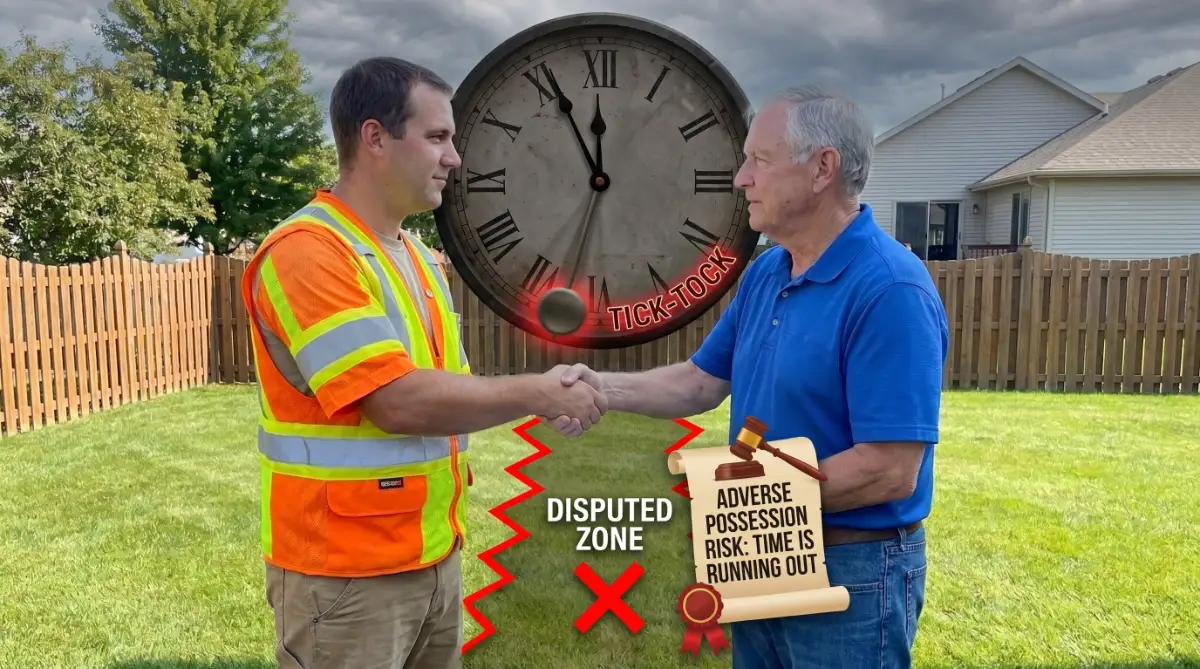
This silence will legally cost you the land. Real estate law features a concept called "adverse possession", commonly known as "squatter's rights".
If someone openly uses your land without your permission for a specific number of years, they can legally petition the court to take ownership of it. By doing absolutely nothing, you slowly surrender your property rights.
Relying on Outdated Physical Markers
Never assume that an existing physical structure represents the true legal boundary. People constantly say, "But the old chain-link fence has been there for forty years!"
A fence built forty years ago by an amateur homeowner without a permit is almost certainly in the wrong place. The dirt holds the truth, not the old rusty metal.
Ignoring the mathematical reality of your deed is highly dangerous. You must approach your physical land with the exact same strict security protocols you use when mastering blockchain assets – a guide for long-term security. You never assume a digital vault is safe without checking the underlying code. Never assume your yard is yours without checking the underlying legal coordinates.
To understand the strict federal standards that property disputes are judged against, the American Bar Association (ABA) provides extensive public resources explaining basic consumer property rights.
Your Action Plan for Reclaiming Your Space
You now possess the strategic clarity to handle a territorial neighbour. You understand that screaming across the yard accomplishes nothing and that a licensed surveyor is your strongest weapon.
Do not let an aggressive neighbour intimidate you into surrendering your financial assets. Treat this exactly like a formal business transaction.
Your Immediate Legal Checklist:
- Take Detailed Photos: Grab your smartphone today. Take clear, timestamped photographs of the exact encroachment, the construction tools, and the damaged landscaping.
- Order the Plat Map: Log onto your county assessor's website and download the official plat map for your specific lot and block.
- Hire a Licensed Surveyor: Call three local surveying companies. Ask for a basic boundary survey and physical corner pins.
- Send the Certified Letter: Write a polite, factual letter stating the legal boundary line. Mail it certified to establish your absolute paper trail.
You worked incredibly hard to purchase your home. You deserve to enjoy every single inch of the land you pay taxes on. By taking swift, documented, and professional action, you stop the theft immediately. You force the situation back into the boundaries of the law, protecting your wealth and restoring the peace of your sanctuary.
Frequently Asked Questions
Can I force my neighbour to pay for half of the land survey?
No, you cannot legally force a neighbour to pay for a surveyor unless a judge specifically orders them to do so in court. If you want the physical proof immediately, you must cover the upfront cost yourself.
What happens if the surveyor proves my own fence is actually on the neighbour's land?
If the survey proves you are the one encroaching, you must remove your structure. Alternatively, you can approach the neighbour and negotiate a cash settlement to create a formal lot line agreement.
Does calling the local police resolve a property line dispute?
No. Local police officers do not carry surveying equipment and cannot enforce invisible property lines. They will tell you it is a "civil matter" and instruct you to hire a real estate attorney.
Disclaimer: This blog post is for informational and educational purposes only. I am not a licensed real estate attorney or a professional land surveyor. Property laws, adverse possession timelines, and zoning regulations vary significantly by state and local municipality. Always consult with a qualified, licensed legal professional before sending formal demands or escalating a neighbourhood dispute to a civil court.