
Backtesting Strategies: The Beginner's Guide Nobody Simplified Until Now
Table of Contents
- The Strategy That Looked Perfect and Failed in Real Life
- What Backtesting Actually Means (No Jargon)
- Why Backtesting Matters More Than Your Gut Feeling
- The 5-Step Backtesting Process for Beginners
- Backtesting Methods Compared
- The Trap That Fools Almost Every Beginner
- The Regulation and Data Integrity Angle
- Common Mistakes That Wreck Backtest Results
- Professional Disclaimer
- Final Word: Your Next Step
- FAQ
- Author Bio
The Strategy That Looked Perfect and Failed in Real Life
A guy on a trading forum once shared a strategy that returned triple-digit profits on paper. Everyone in the thread was hyped. He went live with real money the next week.
It lost money within a month. What went wrong? He never actually backtested it properly. He just eyeballed a chart and convinced himself the pattern was real.
That's the gap this guide closes. I'll show you how real backtesting works, the trap that fools almost everyone, and how to test a strategy before your money is on the line.
What Backtesting Actually Means (No Jargon)
Backtesting means running your trading or investing strategy against historical market data to see how it would have performed in the past.
Think of it like a flight simulator for pilots. You crash the plane in the simulator a hundred times so you never crash it in real life. Backtesting does the same thing for your money.
A proper backtest tells you:
- How often the strategy would have won versus lost
- What the worst losing streak looked like
- How much you'd need to survive a bad stretch
- Whether the strategy actually has an edge, or just got lucky
Pro-Tip: A backtest isn't proof a strategy will work in the future. It's proof it's worth testing further. Treat it as a filter, not a guarantee.
Why Backtesting Matters More Than Your Gut Feeling
Here's the real logic behind why this matters for your life, not just your portfolio.
Most beginners lose money because they trade on emotion and hope. Backtesting forces you to write down exact rules, then proves whether those rules would have actually worked.
This changes everything about how you trade:
- You stop guessing and start measuring
- You know your risk before you ever risk real money
- You catch bad strategies before they catch your wallet
I've seen this play out over and over in investing forums. The traders who backtest properly talk about numbers. The ones who don't talk about "feelings" and "gut instinct". Guess which group survives longer.
Insider Insight: Professional quant traders spend more time backtesting and stress-testing a strategy than they spend actually trading it. That ratio should tell you something.
The 5-Step Backtesting Process for Beginners
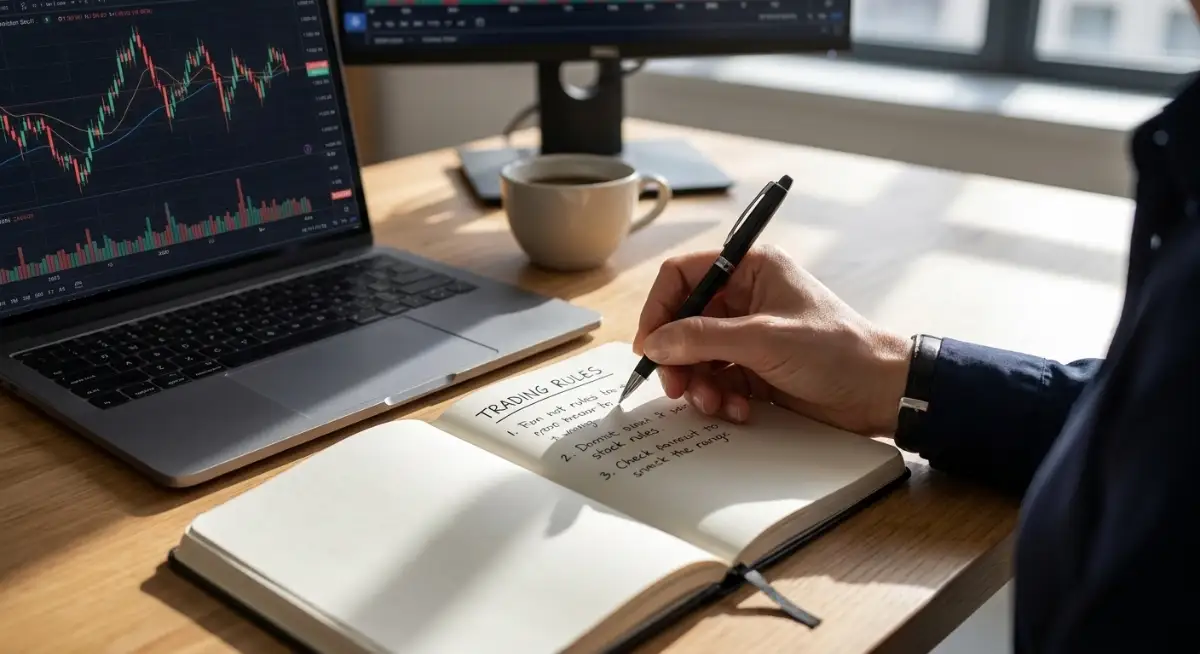
Follow this order. Skipping steps is how people fool themselves.
1. Define Your Exact Rules
Write down precise entry and exit conditions. "Buy when it looks good" is not a rule. "Buy when the price crosses above the 50-day average" is a rule.
2. Choose Clean Historical Data
Use data that includes different market conditions, not just a bull run. A strategy that only survives good times isn't a strategy.
3. Run the Test Without Peeking Forward
Only use information that would have been available at that point in time. This is called avoiding "look-ahead bias", and it's where most beginner backtests quietly break.
4. Check the Full Performance Picture
Don't just look at total profit. Check the worst losing streak, the average win size versus average loss size, and how long recovery took after a drawdown.
5. Test It on Data It's Never Seen
Split your data. Build the strategy on one chunk, then test it on a separate chunk it wasn't built around. This is the single biggest gut check for whether it's real or lucky.
Pro-Tip: If your strategy only looks good on the exact data you built it on, you didn't find an edge. You found a coincidence.
Backtesting Methods Compared

The Trap That Fools Almost Every Beginner
This is the part most beginner guides skip completely, and it's the reason so many "perfect" strategies fail in real trading.
It's called overfitting, or curve fitting. This happens when you tweak a strategy so many times that it matches the past perfectly, but only because you kept adjusting it to fit that exact data.
Signs your strategy might be overfit:
- It uses a huge number of specific rules or conditions
- It performs amazingly on one time period but falls apart on another
- You tweaked it more than a handful of times to "improve" the backtest results
- The logic behind the rules doesn't make real-world sense
Insider Insight: If you can't explain in one sentence why a strategy should work, it's probably curve-fit. Real edges have a real, simple explanation behind them.
The Regulation and Data Integrity Angle
Regulators have been paying closer attention to how trading platforms and advisors present backtested results, and this matters for you as a beginner too.
Key things to watch for, especially if you're using a platform or following a paid strategy:
- Disclosure requirements—legitimate platforms must clearly state that backtested results are hypothetical, not real trading history
- Survivorship bias warnings — some data providers quietly drop failed companies or funds from historical data, which inflates results
- Marketing claims — be cautious of anyone selling a strategy based purely on backtested numbers with no live track record disclosed
- Data source transparency — legitimate tools tell you exactly where their historical data comes from
Pro-Tip: Any strategy seller who won't show you the raw backtest parameters, not just the highlight-reel results, is hiding something.
Common Mistakes That Wreck Backtest Results
These come up constantly in trading forums, and every one of them is avoidable:
- Ignoring transaction costs and slippage, which quietly turn a "profitable" backtest into a real losing strategy
- Using too short a data range, so the strategy never faces a real crash or downturn
- Over-optimizing parameters until the backtest looks flawless and the real world doesn't
- Forgetting taxes and fees in the performance calculation
- Testing only in one type of market (only bull markets, only calm markets)
Professional Disclaimer
This article is for educational purposes only and does not constitute financial, investment, tax, or legal advice. Backtested results are hypothetical and do not guarantee future performance. All trading and investing carries risk, including potential loss of principal. Always consult a licensed financial advisor and verify data sources before relying on any backtested strategy.
Final Word: Your Next Step
Backtesting won't make you a guaranteed winner. It will stop you from risking real money on a strategy that only worked in your imagination.
Your next step: Take one strategy idea you're curious about, write down its exact rules on paper, and test it against at least two different market periods before you even think about trading it live.
FAQ
What is backtesting in simple terms?
Backtesting means testing a trading strategy against historical market data to see how it would have performed before risking real money on it.
How much historical data do I need for a good backtest?
Enough to cover different market conditions, including both rising and falling markets. A narrow data range often gives misleading results.
Can a backtest guarantee future profits?
No. A backtest shows how a strategy would have performed in the past. Markets change, and past performance never guarantees future results.
What is overfitting in backtesting?
Overfitting happens when a strategy is tweaked so much that it perfectly matches past data but fails on new, unseen data. It's one of the biggest traps for beginners.
Do I need coding skills to backtest a strategy?
No. Many platforms offer no-code or spreadsheet-based backtesting tools suitable for beginners, though coding gives you more flexibility for advanced testing.
Author Bio

Faisal Shahzaib writes about personal finance, systematic investing, and strategy testing, helping everyday traders separate real market edges from lucky coincidences.


