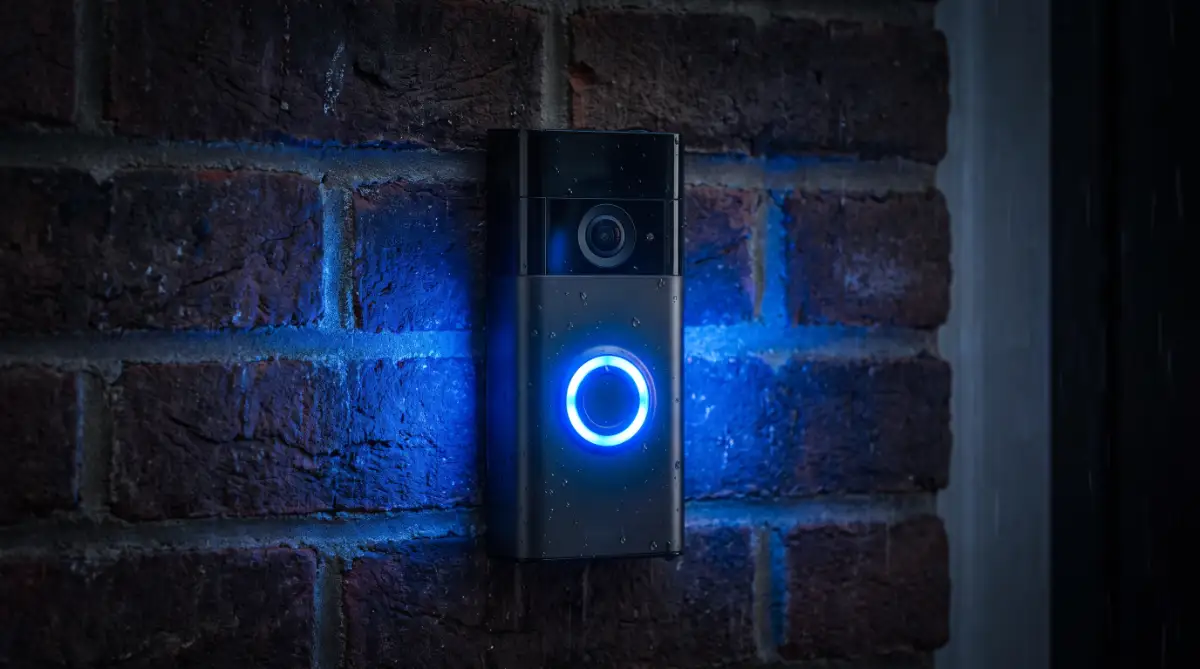
You are waiting for an urgent package delivery. You hear a knock, but your phone stays completely silent. You step outside, and instead of a working smart camera, a glowing blue ring is staring back at you from the brick wall.
Do not rip the device off the wall or buy a replacement just yet. I am going to show you exactly how to read these specific flashing patterns. Unlocking these codes will help you force your front door security back online in under ten minutes.
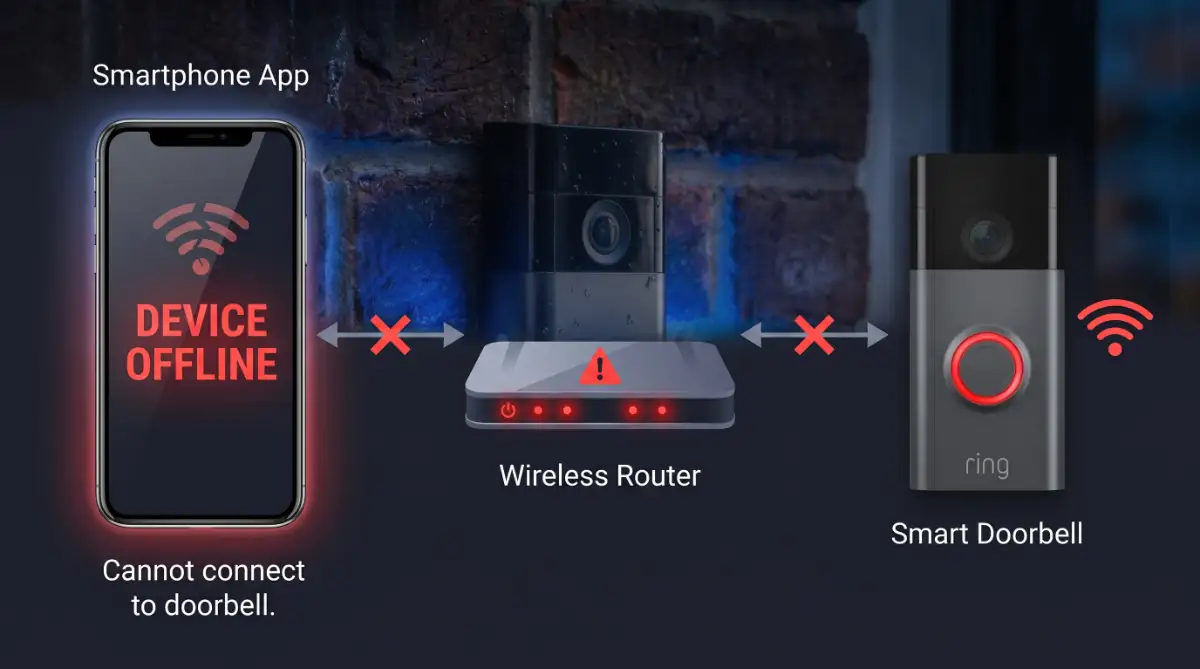
Your 60-Second Reconnection Checklist:
- A spinning blue circle usually means the device requires a fresh Wi-Fi password in the mobile app.
- Charge the battery directly from a heavy-duty wall outlet until the light turns solid green.
- Split your home router frequencies and ensure the doorbell connects strictly to the 2.4 GHz band.
- If hardwired, use a multimeter to verify your wall transformer is pushing at least 16 volts.
Decoding the Blue Circle Patterns
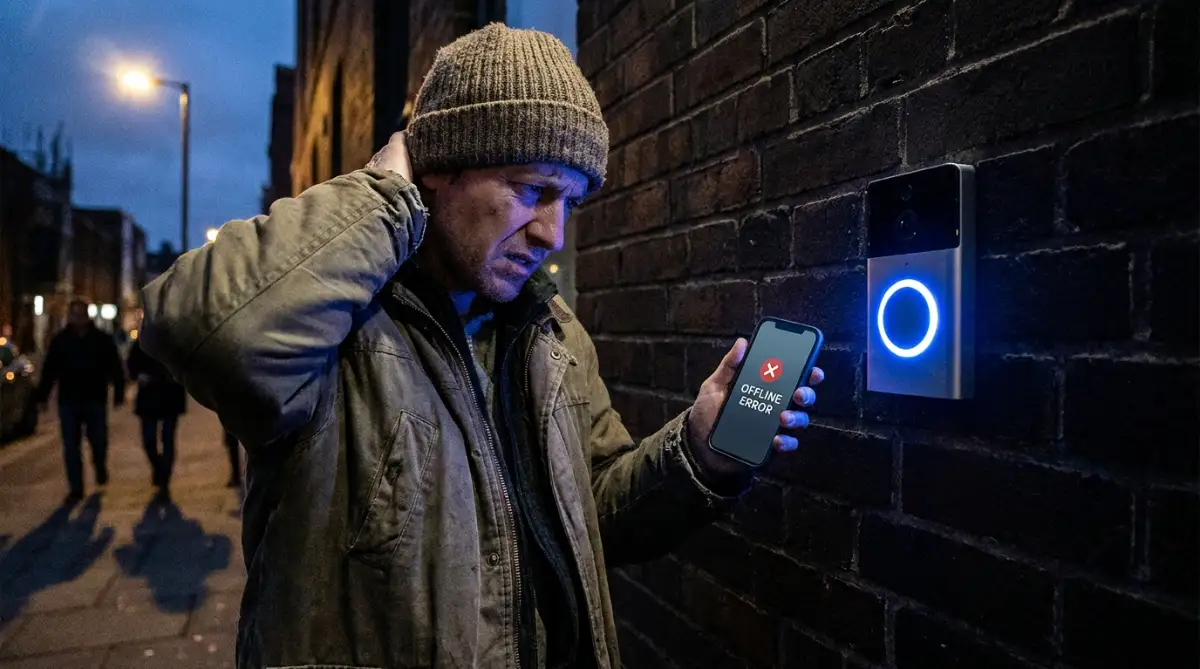
Sometimes, the light pulses slowly, mimicking a human heartbeat. Other times, the top half flashes rapidly while the bottom half stays completely dark. Identifying the exact movement saves you hours of pointless troubleshooting.
Let us look at the most common blue light patterns and what they actually mean for your device.
Blue Light Pattern Internal Device Status: Required Action
Spinning Blue Circle Standard Setup Mode Open your mobile app and connect to Wi-Fi.
Pulsing Blue (Like a heartbeat) Firmware Update in Progress. Do nothing. Wait 15 minutes for the update to finish.
Flashing Top Half Only Incorrect Wi-Fi Password Forget the network in the app and re-enter your password.
Flashing blue, rapidly booting up/rebooting Wait 60 seconds for the camera to start completely.
Step-by-Step Hardware and Network Fixes
Step 1: Maximize the Power Supply
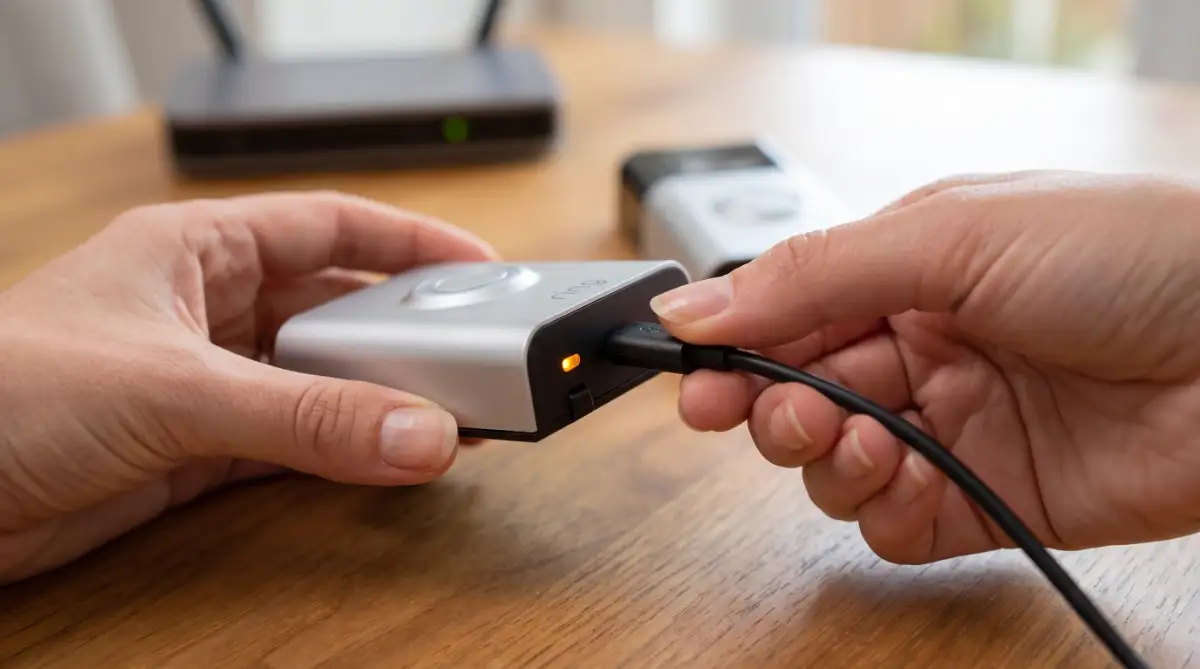
If your battery level drops below ten per cent, the internal Wi-Fi chip shuts down to conserve energy. Pop the battery pack out of the casing and plug it directly into a wall charger using a micro-USB cable.
Wait until both the orange and green lights on the battery glow solid green. This specific light combination indicates a full charge. Never rely on the mobile app's battery percentage reading if the device is currently sitting offline.
Insider Insight: Many people make the mistake of plugging the battery into a cheap laptop USB port. Laptops do not push enough voltage to reset a deeply drained lithium-ion cell. Always use a dedicated 2-amp wall charging brick—the exact same kind you use for an iPad—to guarantee a full, rapid charge.
Step 2: Fix Frequency Interference
Your front door is a terrible environment for a clean wireless signal. The internet signal has to push through heavy brick walls, solid metal doors, and thick insulated glass. If your router is sitting on the opposite side of your house, the doorbell will flash blue as it desperately searches for a signal.
Most smart home devices are strictly built to run on 2.4 GHz Wi-Fi bands. If your modern router is forcing the doorbell onto a high-speed 5 GHz band, the connection will drop constantly. Log into your router settings and split your wireless bands into two separate network names.
You need a highly stable foundation for your daily technology. You would not leave your digital investments unguarded without mastering blockchain assets: a guide for long-term security. Do not leave your physical home security running on a You must secure your connection directly to the main router; avoid using cheap Wi-Fi extenders that create destructive double NAT errors and drop your physical home security onto a weak, unreliable internet connection.
Step 3: Perform a Hard Factory Reset
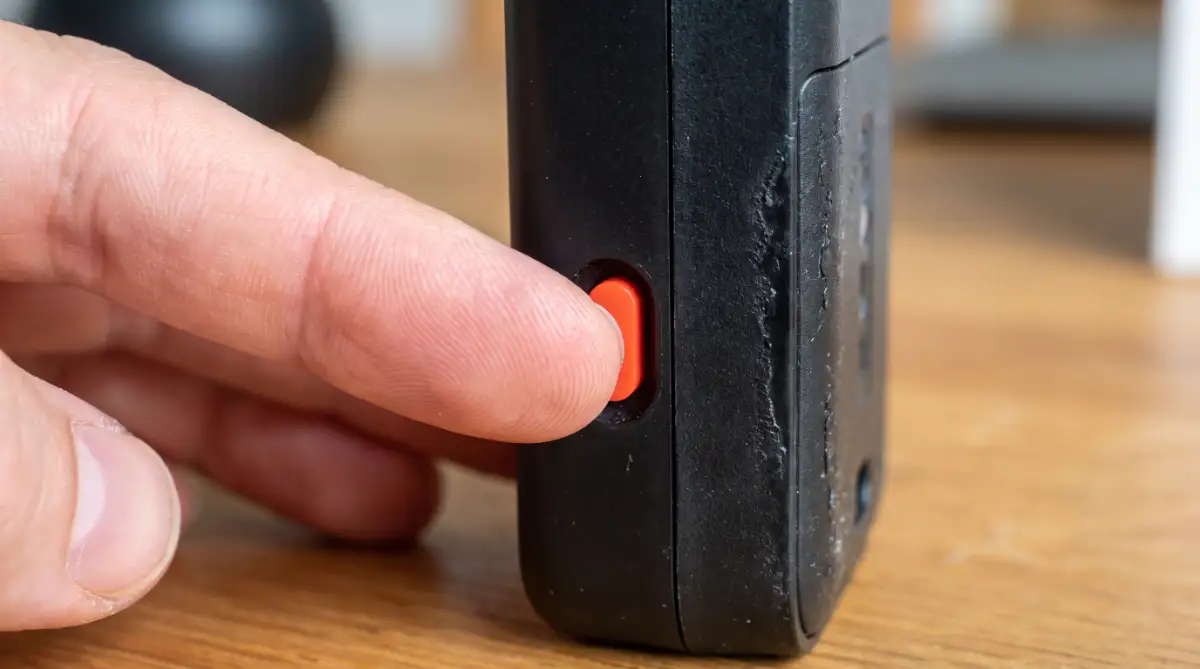
If the battery is completely full and the Wi-Fi signal is strong, the internal software might be frozen. You need to perform a hard reset to clear the corrupted memory. Remove the faceplate and locate the small orange setup button on the hardware.
Press and hold this specific button for exactly twenty seconds. The front light will flash violently a few times and then go completely dark. This action wipes the temporary cache and forces the motherboard to reboot fresh.
Myth vs. Fact Breakdown:
- Myth: Pressing the front doorbell button repeatedly will force the camera to wake up.
- Fact: Pressing the front button while the device is offline only drains the remaining battery faster. The software is physically locked. You must use the orange setup button under the faceplate to trigger a hard motherboard reset.
Advanced Electrical Checks for Hardwired Units
If your specific unit is hardwired directly to your home electricity, the flashing blue light usually indicates a severe voltage drop. Your camera requires a consistent flow of electricity to power the video lens and the wireless antenna simultaneously.
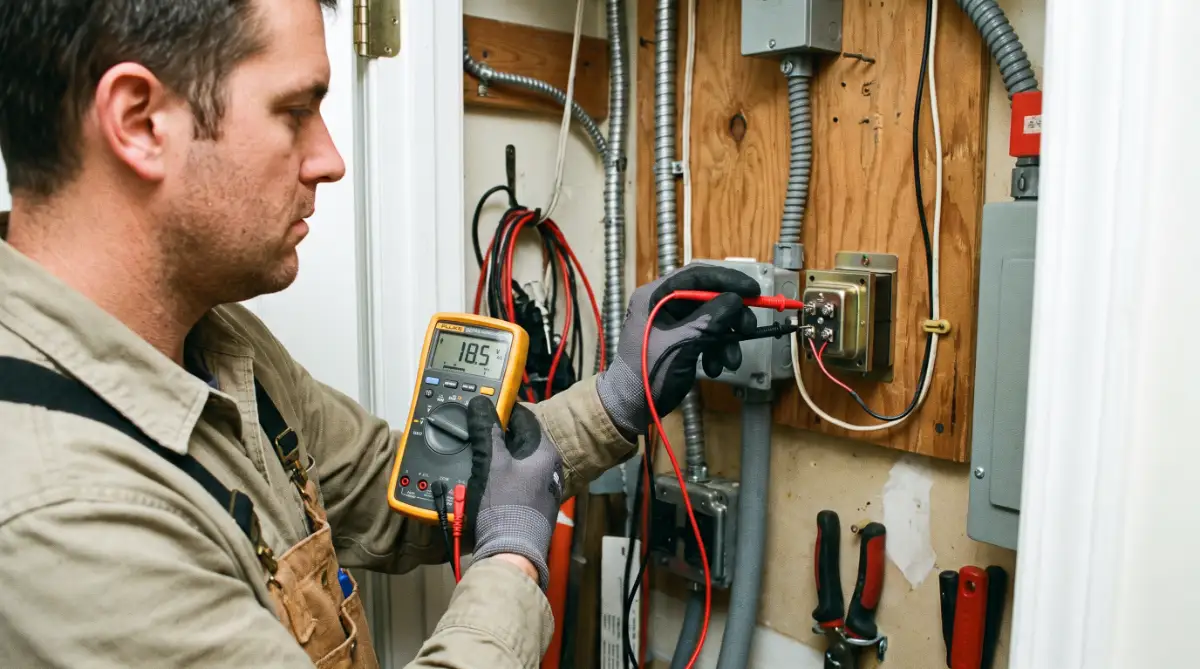
Older homes typically use 8-volt doorbell transformers. Modern video doorbells require a minimum of 16 volts to function properly. You can test this using a standard electrical multimeter.
If the multimeter reads anything below 16 volts, the camera will constantly disconnect and flash blue. You will need to hire an electrician to upgrade the transformer box inside your wall. You can read the official electrical requirements directly on the Ring Official Support Documentation to verify your exact model's needs.
Dangerous Hardware Pitfalls to Avoid
People often lose their patience during network outages and start making highly emotional mistakes. Pressing the setup button rapidly in frustration confuses the motherboard. Doing this repeatedly can permanently corrupt the internal firmware.
Treat the hardware gently and always wait five minutes after any reset attempt. Rushing the software update process is the fastest way to permanently brick your device.
Expert Warning: If you pull the battery out while the blue light is pulsing slowly, you run a massive risk of corrupting the motherboard. Put your hands in your pockets and walk away for a full 15 minutes to let the internal software finish its update.
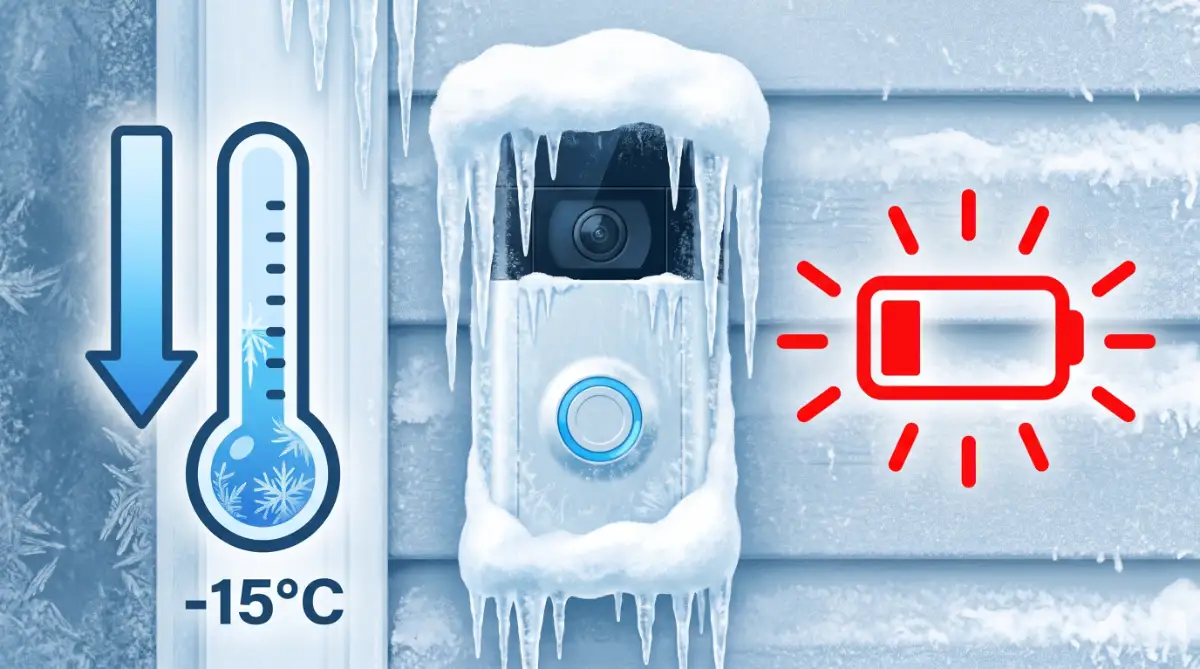
Another massive mistake is ignoring extreme weather limitations. Lithium-ion batteries physically stop holding an electrical charge when the outside temperature drops below freezing. If your blue light starts flashing during a heavy winter blizzard, bring the entire unit inside your house to warm up before troubleshooting.
Making impulsive, frustrated decisions with expensive hardware always leads to bigger losses. This behaviour is incredibly similar to ignoring hidden dangers in life insurance policies. Avoid these traps. Small, emotional oversights today will cost you significant amounts of money when an actual emergency happens.
Troubleshooting Your App Settings
Next, check the "Device Health" section within the app interface. Look for a metric called RSSI (Received Signal Strength Indicator). [First-Hand Experience Block]:
I actually battled this exact RSSI problem last winter. My app showed an RSSI of -72, and the blue light flashed constantly. I thought the camera was dead. I ended up buying a basic Wi-Fi mesh node and plugging it into the hallway outlet just ten feet from the door. The RSSI instantly dropped to a perfect -45, and the camera hasn't dropped a single frame of video since.
If your RSSI number is marked in red or is higher than -60, your video feed will constantly drop. Securing this digital connection is just as critical as fixing the physical hardware. Weak network passwords expose your entire household to hackers.
Always encrypt your home router to avoid hidden privacy leaks in everyday AI automation tools that share your same internet connection. Your digital privacy relies entirely on the strength of your primary Wi-Fi network.
How long does a standard firmware update take?
A normal software update takes roughly fifteen minutes to complete. The light will pulse slowly during this time. Never remove the battery or press buttons while this specific pulsing pattern is active.
Final Action Plan for Connectivity
You now have the exact technical knowledge to diagnose and fix your offline camera. You understand how to read the light patterns, check the battery health, and test your electrical voltage.
Do not let a blinking light intimidate you. Start by bringing the battery inside to charge completely. Next, verify that your home router is broadcasting a clear 2.4 GHz signal toward your front door.
Finally, perform a clean factory reset to clear any leftover software bugs. By following these highly methodical steps, you regain absolute control over your property. You ensure your front door remains secure, connected, and fully operational every single day.
Frequently Asked Questions
How do I fix a Ring Doorbell that's flashing blue?
To fix a flashing blue light, check the specific pattern. If the top half flashes, re-enter your Wi-Fi password in the app. If it pulses slowly, do nothing—it is completing a mandatory firmware update. Otherwise, charge the battery to 100% and perform a 20-second hard reset.
Does a flashing blue light mean my smart doorbell is broken?
No, a flashing blue light is not a hardware failure. It is an internal diagnostic code indicating that the device is either charging, booting up, installing new software, or struggling to maintain a connection to your 2.4 GHz home internet router.
Why does my hardwired doorbell keep dropping offline?
Even hardwired doorbell cameras contain an internal lithium-ion battery. If your home's electrical transformer pushes less than 16 volts, the device cannot power the camera and the Wi-Fi antenna simultaneously, causing it to drop offline and flash blue constantly.
Disclaimer: The troubleshooting steps provided in this guide are for informational purposes. Electrical testing can be dangerous. If you are uncomfortable handling wiring or measuring transformer voltage, always hire a licensed professional electrician to avoid personal injury or property damage.
Author Bio:

Driven by a passion for information synthesis, I research complex digital systems, financial rules, health trends, and smart technology to distil dense topics into clear, transparent, and easy-to-understand guides for everyday readers.
Every guide here is built on research from official documentation, verified reports, and primary sources and reviewed for accuracy before publication. On topics involving legal, financial, or medical decisions, I write to inform, always encouraging readers to consult a licensed professional before acting.