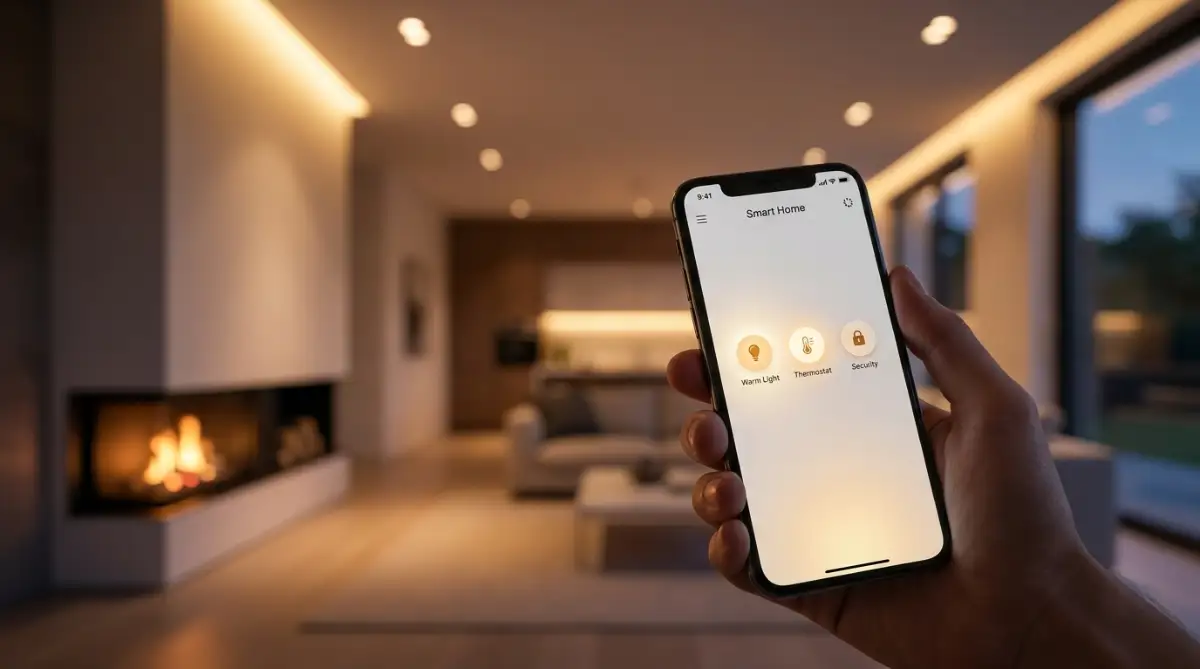
Standing in your hallway at midnight trying to remember which of your nine apps turns off the kitchen light is not living in the future—it is just frustrating. I watched my own phone fill up with two whole folders of smart device apps before I realised my house was running me instead of me running the house.
True smart living should be completely invisible, responsive, and tied to one single dashboard. When you set up your system correctly, every light, sensor, thermostat, and lock works together automatically in the background without you ever touching an app.
Here is the exact blueprint to eliminate app clutter, consolidate your smart hardware, and build a system that works reliably every single day.
Fast Setup Summary:
- Pick One Master Screen: Choose Apple Home, Home Assistant, or SmartThings as your daily command centre.
- Stop Buying Standalone Wi-Fi Bulbs: Switch to Thread or Zigbee to stop clogging your home internet router.
- Look for the Matter Logo: Matter lets iOS and Android users control the same physical device without third-party vendor apps.
- Build Context Automations: Use motion and temperature sensors so your home reacts automatically without you ever opening an app.
Table of Contents
- The Root Cause of Smart Home App Sprawl
- The Three Pillars of a Unified Smart Home
- Wireless Protocol Comparison: Building a Resilient Network
- Step-by-Step Architecture: Unifying Your Home on One Dashboard
- Regional Considerations: Wiring, Frequencies, and Privacy Laws
- Troubleshooting Common Integration Bottlenecks
- What Can You Do With This Information?
- Your Next Step
- Frequently Asked Questions
- The Path to an Invisible Smart Home
The Root Cause of Smart Home App Sprawl
To fix the mess on your phone, you first need to understand why it happened.
- Fragmented Setup:
- Smart Bulb ➔ Manufacturer Cloud A ➔ App A
- Smart Plug ➔ Manufacturer Cloud B ➔ App B
- Smart Lock ➔ Manufacturer Cloud C ➔ App C
- Impact: High latency, multiple vendor logins, and 100% cloud dependence.
- Unified Setup:
- Smart Bulb + Smart Plug + Smart Lock ➔ Local Matter Hub / Controller ➔ Single Unified App
- Impact: Near-instant local processing, 1 universal dashboard, and full offline reliability.
Why Every Manufacturer Demands Its Own App
Because there was no universal standard for years, every brand built its own proprietary cloud wall.
When you tap a button in a proprietary app, your command travels up to an external server, is processed in the cloud, and travels back down to the bulb in your room. If that company goes out of business or changes its cloud subscription model, your hardware suddenly becomes useless.
The Hidden Costs of Cloud-Dependent Wi-Fi Gadgets
Relying on standalone Wi-Fi accessories introduces three major headaches:
- Network Congestion: Every Wi-Fi accessory demands an IP address from your home router. Connecting 40 or 50 smart bulbs, switches, and plugs clogs your 2.4 GHz Wi-Fi band, slowing down your laptops and streaming devices.
- Cloud Outages: If your internet provider drops out for an hour, your lights and switches stop responding to automation schedules.
- Response Latency: Sending a simple switch command through an overseas cloud server creates an irritating delay. In a well-designed home, switches should respond within milliseconds.
You can learn more about securing these endpoints in our guide on understanding IoT network vulnerabilities.
The Three Pillars of a Unified Smart Home
A truly consolidated system rests on three distinct layers working together: the controller, the transport network, and the communication standard.
"Think of the Transport Layer as the highway, the Language Standard as the language the drivers speak, and the Controller as the traffic control tower directing every move."
1. The Universal Controller: Choosing Your Single Screen
Your controller is the master brain. It is the software platform where every device lives, regardless of who manufactured the physical hardware. Instead of opening multiple apps, you interact exclusively with this primary interface.
The four leading unified platforms today are:
- Apple Home: Best for households already using iPhones, iPads, and Apple TVs. Clean interface, strict privacy standards, and local processing.
- Home Assistant: The gold standard for power users and privacy purists. It runs 100% locally on a small dedicated device (like a mini PC or Home Assistant Green) and integrates with virtually every brand in existence.
- Samsung SmartThings: An accessible, user-friendly platform with strong hardware hub support and deep automation options.
- Amazon Alexa / Google Home: Convenient for voice-first homes, though more dependent on cloud services than Apple Home or Home Assistant.
2. The Transport Layer: Why Thread and Zigbee Beat Wi-Fi
To keep your Wi-Fi router clear and responsive, low-power smart accessories should communicate over dedicated mesh networks:
- Thread: A low-power, self-healing mesh protocol designed specifically for smart devices. Thread devices do not connect directly to the internet; they talk to each other and pass data through a Thread Border Router (such as an Apple TV 4K, HomePod, or compatible smart speaker). If one device drops offline, the network automatically reroutes data through another nearby device.
- Zigbee & Z-Wave: Proven, highly reliable mesh radio standards that communicate through a dedicated physical coordinator hub. They keep smart home radio traffic completely off your home Wi-Fi bands.
3. The Translation Layer: How Matter Eliminates Vendor Lock-In
Matter is a universal open-source communication standard developed by the Connectivity Standards Alliance (comprising Apple, Google, Amazon, Samsung, and hundreds of hardware makers).
Think of matter as a universal translator. In the past, a smart sensor spoke only "Brand X Language" and needed "Brand X App". A Matter-certified sensor speaks a single language that Apple Home, Home Assistant, Google Home, and Alexa all understand natively.
Matter also supports Multi-Admin. This feature allows the exact same smart plug to be controlled simultaneously in Apple Home on your iPhone and in Google Home on your partner's Android phone, with zero third-party cloud bridges required.
Matter Protocol: Myth vs. Reality
- Myth: "Matter means I will never need a physical hub again."
- Reality: Matter eliminates separate apps, but you still need at least one physical Matter Controller or Thread Border Router (like an Apple TV, HomePod, or smart hub) to coordinate your devices locally.
- Myth: "Every old device will automatically update to Matter."
- Reality: Older Wi-Fi gadgets rarely get Matter updates; you usually connect them through backward-compatible bridges.
Wireless Protocol Comparison: Building a Resilient Network
Step-by-Step Architecture: Unifying Your Home on One Dashboard
Here is the exact step-by-step process to build a clean, unified smart ecosystem from scratch or migrate an existing cluttered setup.
Step 1: Select Your Primary Ecosystem Platform
Pick one primary ecosystem to serve as your day-to-day dashboard. Do not attempt to run daily manual operations across multiple platforms.
If your household uses mixed phone platforms (iOS and Android), choose Home Assistant or Samsung SmartThings as your backend. If your home is strictly Apple hardware, Apple Home offers the cleanest zero-maintenance native experience.
Step 2: Establish Your Local Wireless Backbone
Before purchasing individual accessories, make sure you have the physical hardware to run a local mesh network:
- For Thread Devices: Ensure you own at least one active Thread Border Router located centrally in your home.
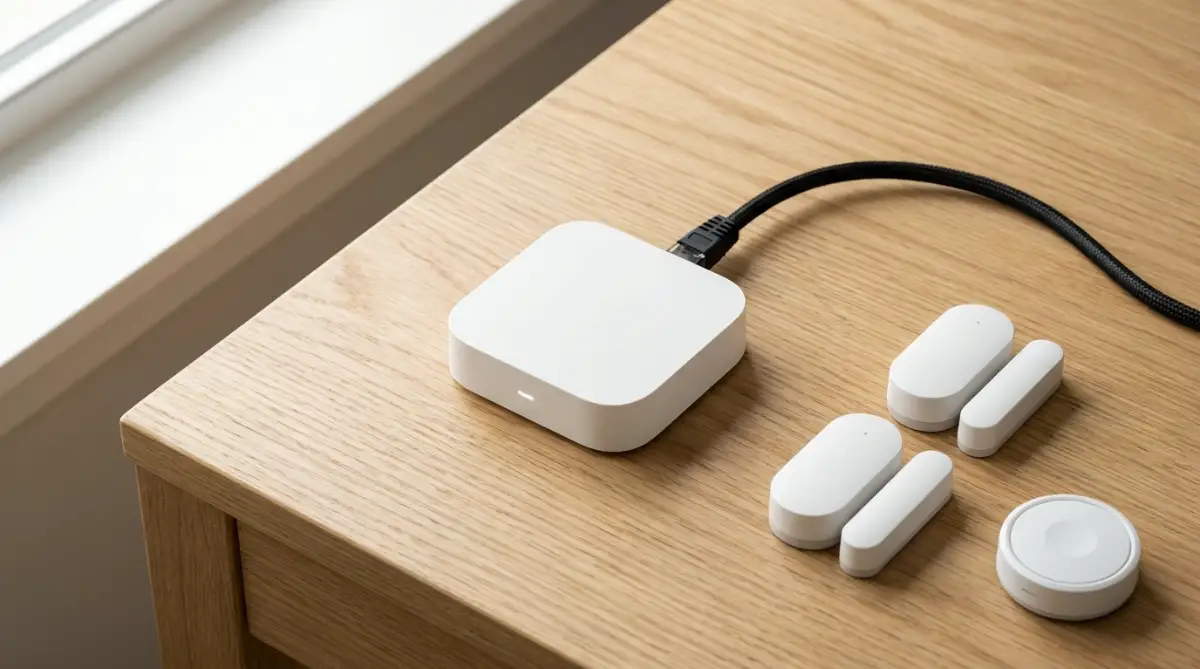
- For Zigbee/Z-Wave Devices: Connect a universal hub directly to your router via Ethernet rather than Wi-Fi to eliminate interference.
- Network Isolation: Create a separate 2.4 GHz IoT Wi-Fi network (or guest network) on your router to isolate cameras and high-bandwidth gear from your primary computers. Review our guide on configuring secure home routers for exact steps.
Pro-Tip on Radio Channels: Both Wi-Fi and Zigbee share the 2.4 GHz frequency band. If your Wi-Fi router runs on Channel 1 or Channel 6, set your Zigbee coordinator to Channel 20 or Channel 25. This prevents your home Wi-Fi traffic from dropping your smart sensor signals.
Step 3: Commission Devices via Matter and Local Bridges
During setup of any Matter-certified device:
- Open your primary ecosystem app (e.g., Apple Home or Home Assistant).
- Scan the Matter QR code printed on the physical device or packaging.
- The device pairs directly to your local controller through Thread or local Wi-Fi.
You do not need to download the manufacturer's mobile app, create an external cloud account, or hand over your email address to pair standard Matter accessories.
Step 4: Build Autonomous Routines Instead of Manual Buttons
The ultimate cure for app clutter is eliminating the need to look at any screen at all. Move your mindset from remote control (tapping an icon on a phone) to true automation (the house reacting to context).
Group your devices into three fundamental automation categories:
- Occupancy & Motion: Use discreet PIR motion and mmWave presence sensors in bathrooms, hallways, and stairwells. Lights turn on when you enter and turn off five minutes after you leave.
- Environmental Thresholds: If an indoor humidity sensor exceeds 65%, turn on the exhaust fan plug automatically. If the outdoor temperature drops below freezing, adjust the heating schedule.
- Time and Solar Position: Set outdoor lighting to activate at local sunset and dim to 20% at midnight, adjusting automatically across seasons without manual rescheduling. You can explore our tutorial on smart home automation for energy savings to see how these routines lower monthly bills.
The 2-Second "Guest Test" for Real Automation
A quick way to know if your smart setup is actually smart: Can a houseguest turn on the bedside lamp or adjust the room temperature without asking for your Wi-Fi password or downloading an app?
If the answer is no, your automation is broken. Always back up your automations with intuitive physical wall switches, smart wireless buttons, or automated presence sensors.
Regional Considerations: Wiring, Frequencies, and Privacy Laws
Smart home infrastructure varies noticeably depending on where you live. Understanding regional differences prevents costly hardware return trips.
US vs. UK and European Electrical Standards
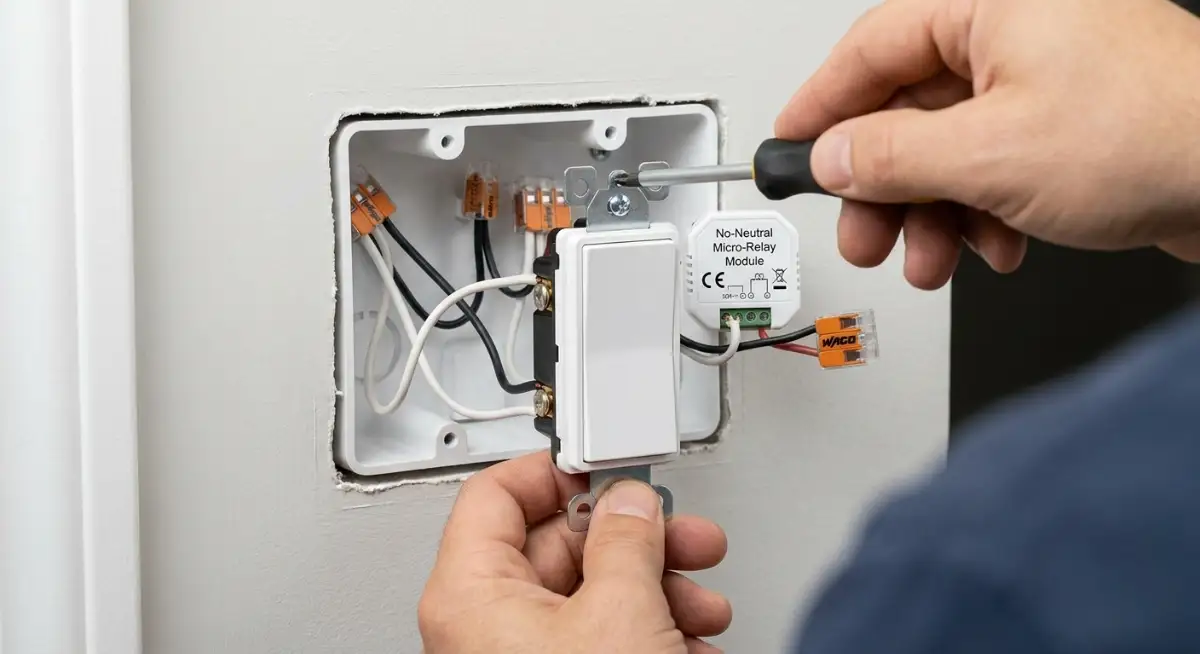
- Neutral Wires: Most modern US electrical junction boxes include a neutral wire (white wire), making smart in-wall switch installation straightforward. Older UK and European homes frequently lack a neutral wire at the wall switch box. In these properties, look specifically for "No-Neutral Required" Zigbee switches or install smart micro-relays directly behind the light fixture ceiling rose.
- Backbox Dimensions: US wall boxes are rectangular, while UK and European backboxes are round or square (often 35 mm to 47 mm deep). Ensure smart switch modules physically fit your wall depth before purchasing.
- Radio Frequencies: While Wi-Fi, Bluetooth, Zigbee, and Thread operate on universal 2.4 GHz frequencies worldwide, Z-Wave uses strictly regulated regional frequencies. US Z-Wave operates at 908.42 MHz, while UK and European Z-Wave operate at 868.42 MHz. Hardware bought in the US will not pair with European hubs.
Data Privacy Regulations and Local Storage (GDPR & PSTI)
In the UK, the PSTI (Product Security and Telecommunications Infrastructure) Act legally bans universal default passwords on connected smart hardware and mandates clear vulnerability disclosure timelines from manufacturers.
In the European Union, the Cyber Resilience Act (CRA) and GDPR establish strict guidelines on consumer data processing and security updates.
Choosing local controllers (like Home Assistant or Apple Home with local Matter/Thread binding) keeps your room occupancy data, camera video streams, and daily schedules stored entirely inside your physical living space, well within the highest privacy thresholds.
Troubleshooting Common Integration Bottlenecks
1. "Device Unresponsive" Errors
- Cause: Weak mesh density. Battery-powered sensors cannot route signals; only mains-powered devices (smart plugs and in-wall switches) act as mesh repeaters.
- Fix: Plug in a mains-powered Thread or Zigbee smart plug midway between your hub and the failing sensor to strengthen the mesh signal.
2. Phantom Device Activation
- Cause: Conflicting automation rules running simultaneously in both the manufacturer's cloud app and your primary hub app.
- Fix: Delete the automation inside the manufacturer app entirely, or delete the manufacturer app once the device is paired through Matter. Manage all rules in one place.
3. Wi-Fi Router Disconnections
- Cause: Home router assigning dynamic IP addresses that change on reboot.
- Fix: Open your home router settings and assign static/reserved IP addresses to all smart bridges and high-bandwidth security cameras.
What Can You Do With This Information?
For Homeowners and Renters
- Audit your phone today: identify how many smart apps you currently have installed.
- Switch from buying random Wi-Fi accessories to purchasing Matter-over-Thread or Zigbee hardware.
- Consolidate control of all existing devices into Apple Home, Google Home, SmartThings, or Home Assistant.
For Property Managers and Builders
- Specify standard-depth wall backboxes and neutral wiring during renovations to simplify smart switch adoption.
- Deploy standard Thread border routers to allow future occupants to connect to their preferred ecosystem without rewiring.
- Standardise on open matter protocols to avoid legacy vendor lock-in when servicing heating and lighting systems.
Your Next Step
- Conduct an App Inventory: List every smart device in your home and note which wireless protocol it uses (Wi-Fi, Zigbee, Z-Wave, or Thread).
- Pick Your Primary Hub: Set up your central controller (Apple TV 4K, Home Assistant Green, or SmartThings Hub).
- Migrate One Room First: Start with a high-traffic area like your living room or kitchen. Pair the lights and plugs to your central hub, build your presence automations, and delete the secondary vendor apps from your home screen.
- Expand the Mesh: Add mains-powered repeaters as you expand to bedrooms and exterior doors to ensure total network coverage.
Frequently Asked Questions
Can I control Matter devices with both an iPhone and an Android phone?
Yes. Matter includes a feature called Multi-Admin. You can commission a Matter device into Apple Home using an iPhone and simultaneously share access with Google Home or SmartThings on an Android device without installing third-party manufacturer apps [1].
Do I have to replace all my existing non-Matter smart devices?
No. You do not need to throw away existing hardware. You can connect existing Zigbee, Z-Wave, or proprietary devices to your central system using compatible hardware bridges or local platforms like Home Assistant, which translates older protocols into unified dashboard controls.
What happens to a unified smart home if the internet goes down?
If your system is built on local protocols (Thread, Zigbee, Z-Wave, or local Matter controllers), your automations, wall switches, and sensors continue to work normally during an internet outage [2]. Only remote access outside the home and voice commands requiring cloud servers will temporarily pause.
Why do smart bulbs turn back on after a power outage?
Many smart bulbs default to turning on at full brightness when power returns as a safety feature. Most modern platforms and Matter-certified bulbs allow you to change this setting in your hub to "Restore Previous State" or "Remain Off" after a blackout.
Summary: The Path to an Invisible Smart Home
A well-designed smart home does not demand your attention; it gets out of your way.
By grounding your setup in open standards like Matter, deploying a robust Thread or Zigbee mesh, and managing everything through a single local controller, you eliminate app clutter permanently. You gain a faster, more private, and genuinely automated home that anyone in your family can use effortlessly.
Sources & External References
- [1] Connectivity Standards Alliance (CSA): Official Matter Specification & Multi-Admin Architecture
- [2] Thread Group: Thread Technical White Paper & Mesh Resilience
- [3] UK National Cyber Security Centre (NCSC): Smart Devices in the Home & PSTI Compliance
- [4] US Department of Energy (DOE): Energy Saver Guide to Home Automation Systems
Disclaimer: This guide is for informational and educational purposes only. Always turn off the main electrical breaker before inspecting or installing in-wall switches or mains-voltage wiring. If you are uncertain about electrical codes, wall box depth, or neutral wiring in your jurisdiction, consult a certified licensed electrician.
Author BIO

Faisal Shahzaib is an elite digital tech strategist, SEO data analyst, and investigative researcher specialising in smart home automation, cybersecurity, and emerging technologies. He breaks down complex IoT networks and communication protocols into actionable, highly practical guides. Faisal helps readers globally optimise their living spaces, eliminate digital clutter, and build resilient, private smart home ecosystems.
Connect on LinkedIn or visit his profile page.